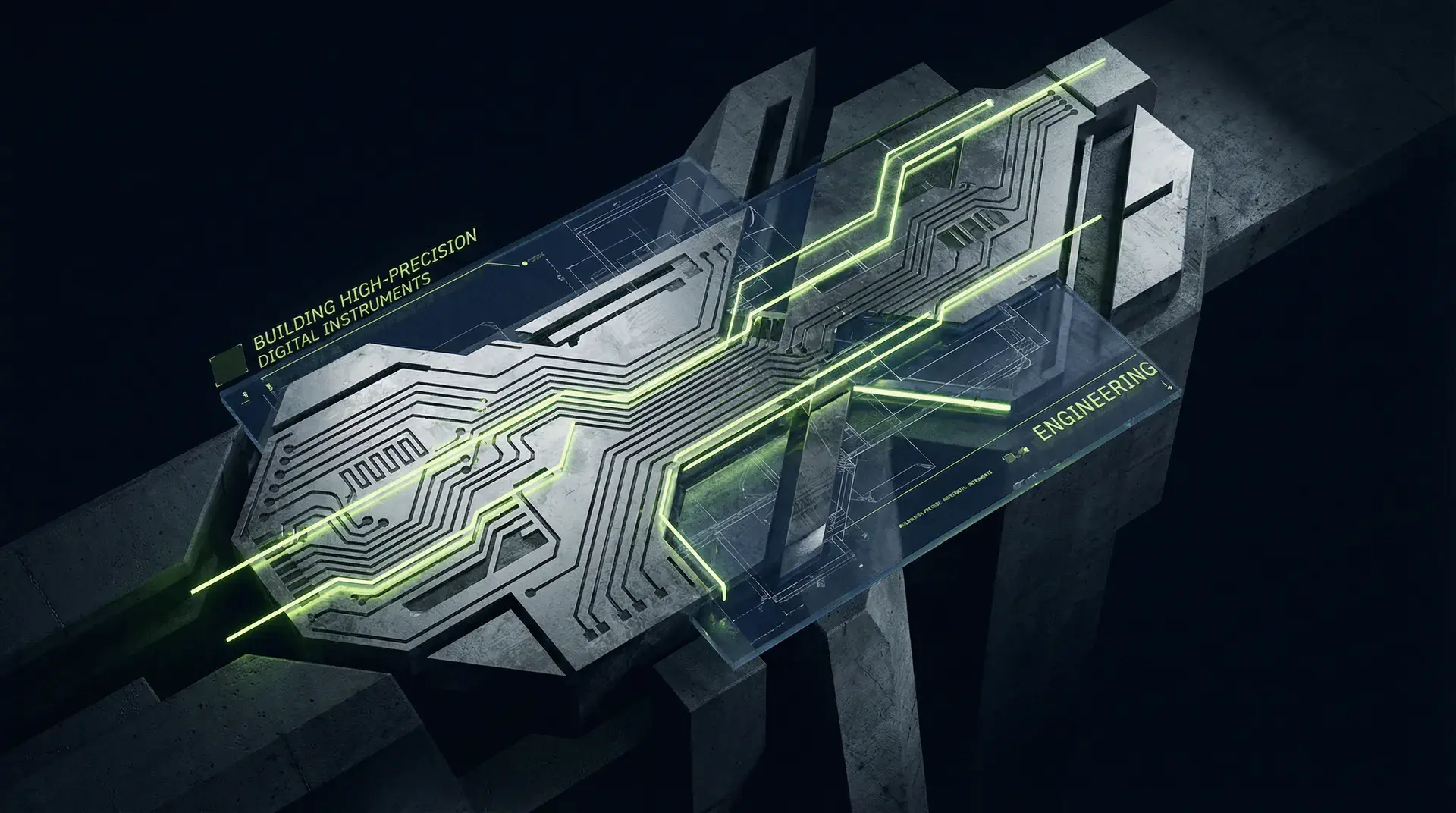
The web has become saturated with generic templates and cookie-cutter solutions. Every startup looks the same, every SaaS dashboard feels interchangeable. This is the anti-thesis of what technology should represent.
The Problem with Generic
When every tool looks the same, we lose something essential... the connection between form and function. A surgical instrument should feel precise. A spacecraft control panel should inspire awe. Why should our digital tools be any different?
const philosophy = {
	core: "Atmosphere",
	precision: 0.9999,
	style: "Void",
	user: null, // Awaiting input sequence...
};Atmospheric Engineering
This is the approach I call atmospheric engineering... building digital experiences that have weight, presence, and intentionality. Every interaction should feel deliberate. Every animation should have purpose.
Key Principles
- Tactile feedback: Interfaces should respond with physicality
- Visual weight: Elements need presence, not floatiness
- Intentional friction: Sometimes slowing down improves the experience
- Atmospheric depth: Layers of subtle detail create immersion
The Technical Foundation
Building this way requires a solid technical foundation. Here's what powers this site:
| Layer | Technology | Purpose |
|---|---|---|
| Framework | Next.js 15 | App Router, Server Components |
| Styling | Tailwind CSS 4 | Utility-first, CSS variables |
| Animation | Framer Motion | Spring physics, gesture support |
| Scroll | Lenis | Smooth, normalized scrolling |
Closing Thoughts
The web deserves better than templates. Every project is an opportunity to craft something that stands apart... something with atmosphere.
This is just the beginning.